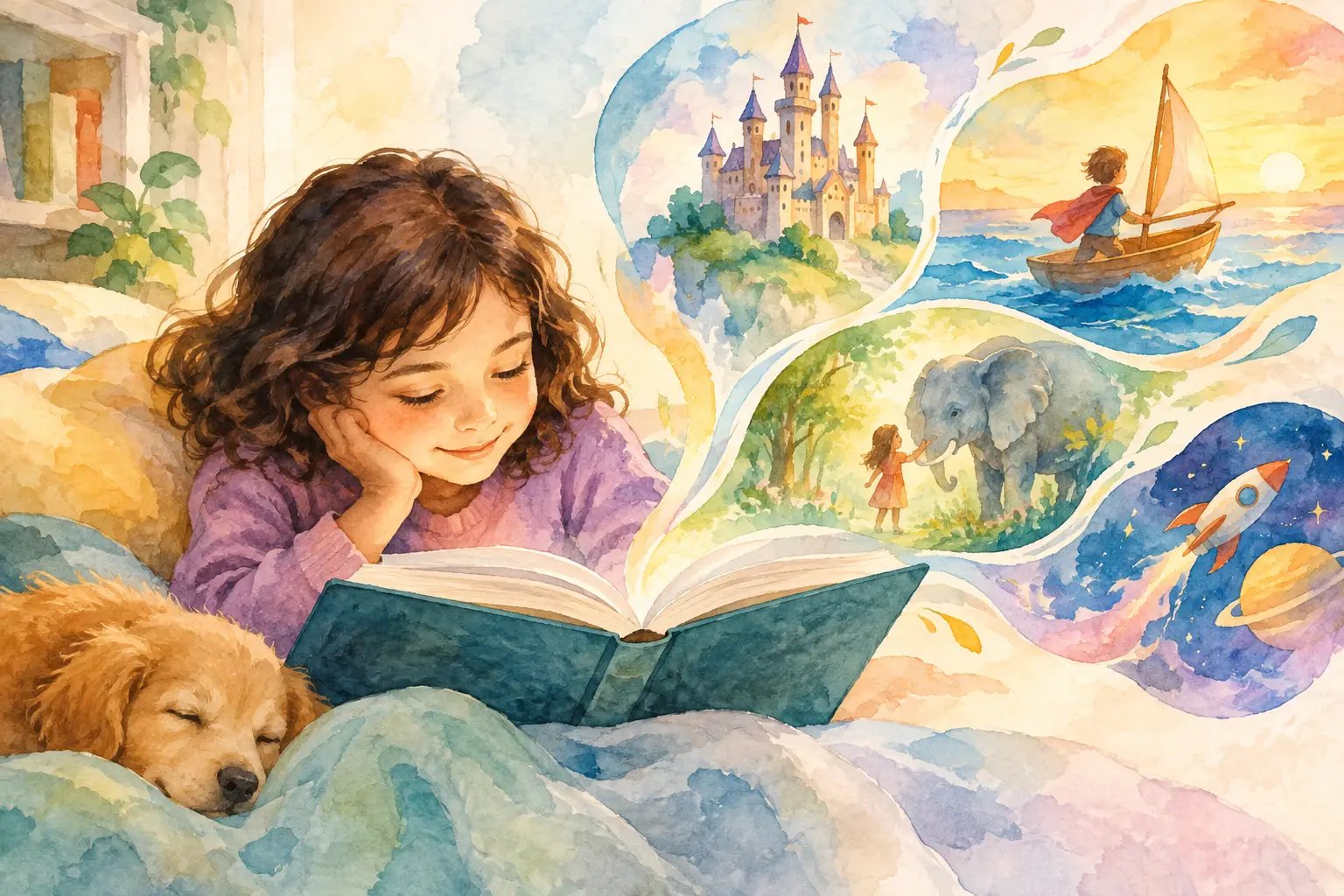
The best bedtime story is not always the longest one. Sometimes your child has just enough energy for a quick dinosaur rescue before lights out. Other nights, they are ready to travel through space, meet a dragon, and solve a mystery one page at a time. Customizable story length for kids gives families room for both kinds of magic - a story that fits the moment, while still making your child the hero. 📚✨
When a book includes your child’s photo and places them at the center of the adventure, they are more likely to lean in, point to the page, and ask what happens next. Choosing the page count helps make that experience feel right for their age, attention span, and family routine.
Why Story Length Matters More Than You Might Think
Young children do not experience books by page count alone. They experience them through the cozy minutes beside a caregiver, the excitement of recognizing themselves in the pictures, and the satisfaction of reaching the ending before they become too sleepy or restless.
A story that is too short can leave an eager reader wishing for more. A story that is too long can lose a child who was excited at the beginning but is not quite ready for a bigger adventure yet. The sweet spot depends on the child, the time of day, and even the theme you choose.
That flexibility can be especially helpful in families with more than one child. A preschooler may adore a brief, playful animal adventure with lots of familiar visual details. An older sibling may want a longer superhero mission with a beginning, a challenge, and a triumphant finish. Both children deserve a book that feels made for them.
Choosing a Customizable Story Length for Kids
There is no single perfect page count for every reader. Instead, think about how your child currently enjoys stories. Do they sit close and ask questions about every picture? Do they love fast-paced action? Are they building confidence by sounding out words, or do they prefer listening while you read aloud?
For busy mornings and winding-down nights
Shorter stories work beautifully when time is limited. They can become a cheerful part of the morning routine, a calming reset after preschool, or one last shared moment before bed. A compact adventure still has plenty of room for wonder: your child can search for hidden treasure with pirate friends, help animals in the forest, or discover a sparkling underwater world.
Shorter page counts are also a gentle choice for children who are still practicing how to stay with a story. Finishing a book gives them a real sense of accomplishment. When they know the ending is within reach, they may be more likely to stay engaged and ask to read it again.
For children who love to linger
Longer stories give imaginative kids more time to settle into the adventure. They are a lovely fit for weekend reading, quiet afternoons, travel days, or those special nights when nobody is in a rush.
With more pages, a child can move through several story moments: preparing for a space mission, facing a friendly challenge on a faraway planet, and returning home as the brave explorer who saved the day. A longer format can make the experience feel more immersive, particularly for elementary-aged children who enjoy following a bigger plot.
The trade-off is simple: a longer story asks for more time and attention. That is wonderful when your child is excited and rested, but it may not be the right choice for a late bedtime after a busy day. Flexibility lets you choose the adventure that suits the real life in front of you, not an idealized reading schedule.
Match the Page Count to the Child and the Moment
Age can offer a helpful starting point, but it should not become a rule. Some four-year-olds happily listen to longer stories about fairies or princesses. Some seven-year-olds prefer a quick, funny dragon adventure they can revisit independently. Your child’s interests matter just as much as their age.
For younger preschoolers, a shorter personalized book often keeps the experience joyful and easy to follow. Familiar faces, clear action, and a simple goal can hold their attention beautifully. If they want the same story again tomorrow, that is a win - repetition helps young children build language, prediction skills, and comfort with books.
For kindergarten and early elementary readers, a medium or longer story may create more opportunities to talk about what is happening. You can pause to ask, “What do you think your brave hero will do next?” Because the hero looks like your child, the answer often comes quickly and confidently.
Mood matters too. After a full day of school, sports, or errands, a short community hero story may feel just right. On a rainy Saturday, a longer journey through a magical kingdom might become the main event. The page count is not simply a setting. It is a way to shape the rhythm of your family’s reading time.
Let the Theme Help Set the Pace
Different adventures naturally invite different story lengths. A quick animal rescue can be complete and satisfying in a shorter format. A journey with dinosaurs, pirates, or superheroes may inspire a few more twists and discoveries.
Think about what your child loves most right now. If they are fascinated by rockets, choose a space adventure and give them enough pages to explore new planets. If they carry a fairy wand everywhere they go, a gentle magical tale can be the perfect quiet-time read. For children who love helping others, a community hero story can offer a warm, meaningful mission without needing a long plot.
The goal is not to stretch a theme just to make a book longer. It is to give the adventure enough space to feel complete. A well-chosen short story can feel rich. A longer story can feel wonderful when each page adds something your child wants to discover.
Create a Reading Routine That Can Grow
One of the sweetest things about personalized eBooks is that they can become part of a child’s own library. You do not have to create one book that does every job. A family can keep a mix of story lengths for different occasions.
You might make a short underwater adventure for weeknights, then create a longer dragon quest for a weekend treat. As your child grows, their library can grow with them. The books they loved as a preschooler can remain cherished keepsakes, while new stories reflect their changing interests and longer attention span.
At LittleStories, the creation process is designed to stay simple: upload your child’s photo, choose an adventure theme, and select a page count that feels right. No writing or design experience is needed. You bring the child who inspires the story; the book brings their imagination to life. 🌟
This is also a thoughtful way to make reading feel less like a task. A child who hesitates around generic books may be eager to open a story where they are the astronaut, the animal rescuer, or the brave captain. Seeing themselves in the narrative can turn “one more page” into a proud little request for “read my story again.”
A Few Signs You Chose the Right Length
The right story length usually reveals itself in the little moments. Your child stays curious. They react to the pictures. They ask questions, repeat favorite lines, or tell someone else about the adventure later. Most of all, the book ends with them feeling happy, seen, and ready for whatever comes next.
If they lose focus halfway through, that does not mean they are not a reader. It may simply mean a shorter adventure fits better right now. If they race through the final page and immediately invent a sequel, they may be ready for more. Let their response guide the next story you create.
A personalized book does not need to be long to become memorable. It only needs to feel like it belongs to them - one magical page at a time.