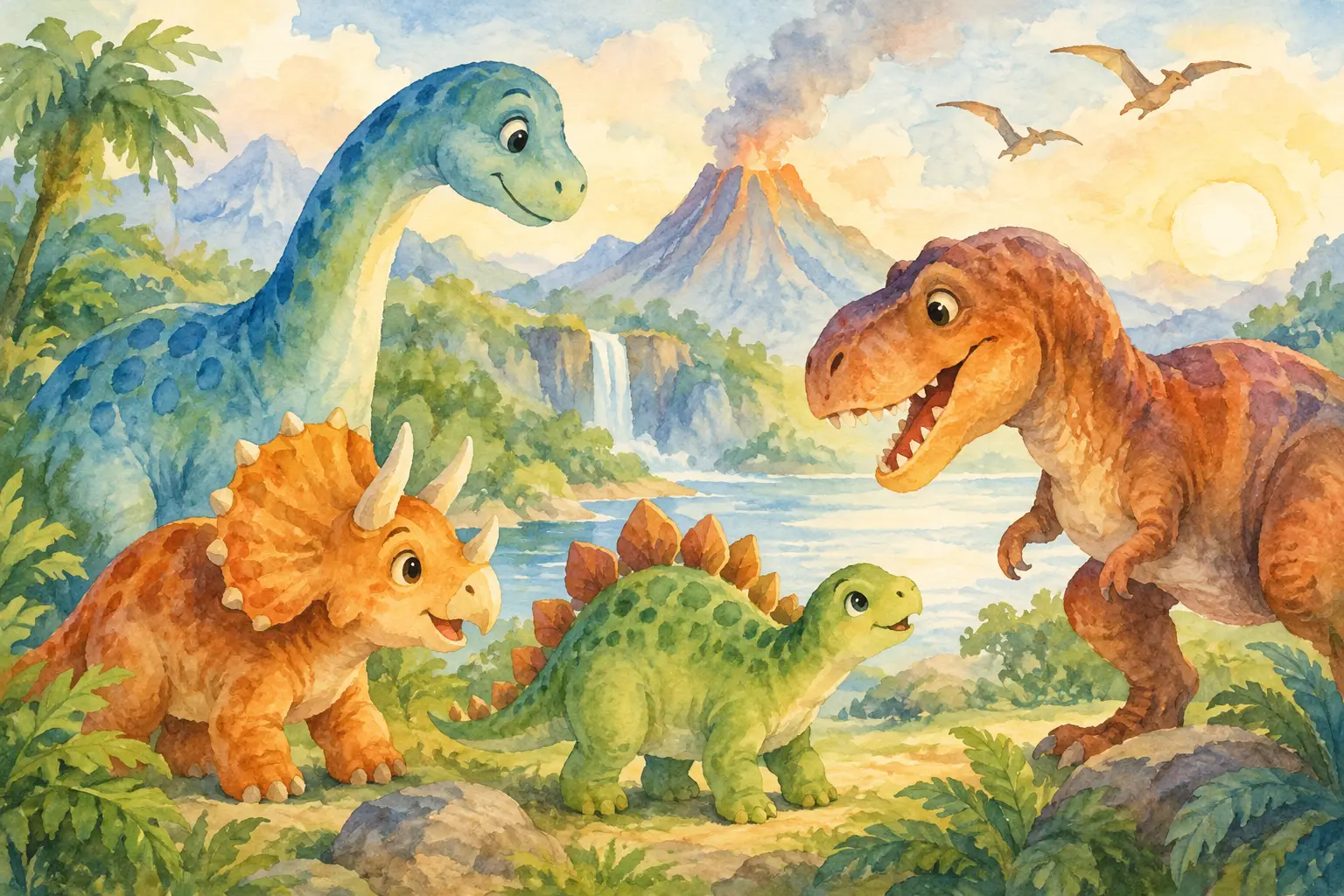
A preschooler does not need a paleontology lesson to fall in love with dinosaurs. They need a friendly triceratops with a problem to solve, a stompy sound they can copy, and a brave little hero who feels a lot like them. The best dinosaur stories for preschoolers turn big prehistoric creatures into cozy, exciting companions for the bedtime routine. 📚✨
Why Dinosaur Stories for Preschoolers Work So Well
Dinosaurs are wonderfully larger than life, but preschoolers can understand their biggest feelings. A tiny dinosaur who worries about trying something new, a hungry stegosaurus looking for a snack, or a baby dino searching for a friend gives children a safe way to talk about courage, kindness, frustration, and curiosity.
They also invite children to join the story with their whole bodies. Preschoolers can stomp like a T. rex, stretch their necks like a brachiosaurus, whisper through a pretend jungle, or roar when the hero reaches the mountaintop. That movement is not a distraction from reading. For many young children, it is part of how the story sticks.
A good dinosaur adventure balances a little suspense with plenty of reassurance. A rumbling volcano or a mysterious footprint can feel thrilling, but young readers should know that their dino friends are safe, supported, and heading toward a happy ending. The goal is wonder, not worry.
What Makes a Great Preschool Dinosaur Story
Preschool attention spans can be delightfully unpredictable. One night, your child may want to hear every word. The next, they may race ahead to the page with the giant dinosaur egg. Stories that work well at this age have a clear path, expressive moments, and room for children to participate.
Keep the adventure simple and satisfying
The strongest plots often begin with one small goal. Maybe the hero needs to return a lost leaf to a diplodocus, find the perfect spot for a dinosaur picnic, or help a shy pterodactyl learn to fly. One clear mission helps preschoolers follow along and feel proud when the problem is solved.
A story does not need a frightening villain to be exciting. A rainstorm, a wrong turn, a wobbly bridge, or an enormous pile of leaves can create just enough challenge. When the characters work together, children see that asking for help and trying again are brave things to do.
Choose language children can play with
Rhythm, repetition, and sound words make dinosaur tales especially memorable. A repeated phrase such as “Stomp, stomp, stomp, we are almost home!” gives your child a line to say along with you. Roars, crunches, whooshes, and tiny hatchling peeps make read-aloud time feel like a shared performance.
There is room for real dinosaur names, too. Words like triceratops and ankylosaurus can be fun to say, and many preschoolers love becoming the family dinosaur expert. Introduce new names naturally, without turning every page into a quiz. If your child wants to know more, follow their curiosity. If they are focused on the dinosaur’s purple backpack, that is perfectly wonderful too.
Let the pictures carry part of the story
At this age, illustrations are not simply decoration. They help children notice feelings, predict what might happen next, and tell the story in their own words. Look for scenes with warm expressions, easy-to-spot details, and dinosaurs that feel exciting without looking too scary.
This is also where personalization creates a little extra magic. When a child recognizes their own face in a story, they are not just watching the adventure happen. They are the explorer who discovers the fossil, comforts the baby dinosaur, or leads the parade home.
Make Reading Time an Adventure
You do not need costumes, special voices, or a perfectly quiet room to make a dinosaur book memorable. A few playful habits can help your preschooler stay connected to the pages, especially after a busy day.
Before you start, ask one simple question: “What kind of dinosaur adventure should we have tonight?” Your child might choose a silly story, a sleepy story, or a big jungle mission. Giving them a small choice builds anticipation and makes the ritual feel like it belongs to them.
As you read, pause when the story gives you a natural opening. “Where do you think those huge footprints go?” or “How do you think the little dinosaur feels right now?” are gentle invitations, not tests. If your child interrupts to tell you about their imaginary dino pet, let them. Those side conversations are part of early literacy, imagination, and connection.
Try adding a simple action for recurring moments. Everyone can stomp three times when the dinosaurs start walking, flap their arms when a pterodactyl appears, or place a hand on their heart when a character does something kind. Keep it light. Some children love a full performance, while others want to curl up close and listen.
Shorter stories can be a smart choice for rushed weekday bedtimes or children who are still building their reading stamina. A longer adventure may be perfect on a quiet afternoon, during travel, or when your child asks for “just one more page.” There is no single right page count. The best length is the one that leaves your child eager to return tomorrow.
Create a Dinosaur Story That Feels Like Theirs
Generic dinosaur books can be lots of fun, but a personalized story adds a special spark. Imagine your child spotting a dinosaur egg in the backyard, following a friendly raptor through a fern-filled valley, and discovering that the bravest explorer in the story is them.
With LittleStories, parents can create that kind of keepsake in a few simple choices. Upload a photo, select a dinosaur adventure, and choose a page count that suits your family’s reading time. The result is a digital storybook built around your child, with a familiar face at the center of a brand-new adventure. 🌟
Personalization can be especially helpful for children who are hesitant to sit with a book. Seeing themselves on the page gives them an immediate reason to look closer. It can also support meaningful conversations: “You helped the lost dinosaur because you are a caring friend,” or “You kept going even when the path looked tricky.” The story becomes a playful mirror for the qualities you already see in your child.
A personalized dinosaur book also makes a sweet addition to family routines beyond bedtime. Read it together before a first day of preschool, bring it along for a long car ride, or revisit it when a grandparent wants to share a familiar story from afar. Since young children often ask for the same book again and again, a story made just for them can become a favorite part of the family library.
Grow With Your Little Dinosaur Fan
The beauty of dinosaur stories is that they can grow alongside your child. At first, they may love roaring at every page and pointing out the biggest creature. Later, they may begin retelling the plot, naming dinosaurs, or inventing a new ending before you reach the last page.
Follow those changing interests. If your child is fascinated by eggs, build a story around a hatchling. If they are practicing friendship, choose an adventure where dinosaurs help one another. If they need a confidence boost, make them the leader of the expedition. The most memorable stories meet children where they are, then invite them one tiny stomp further.
Tonight, let your little explorer choose the roar, the route, and the dinosaur friend. A few pages of prehistoric pretend play can become the cozy moment they remember long after the lights go out.