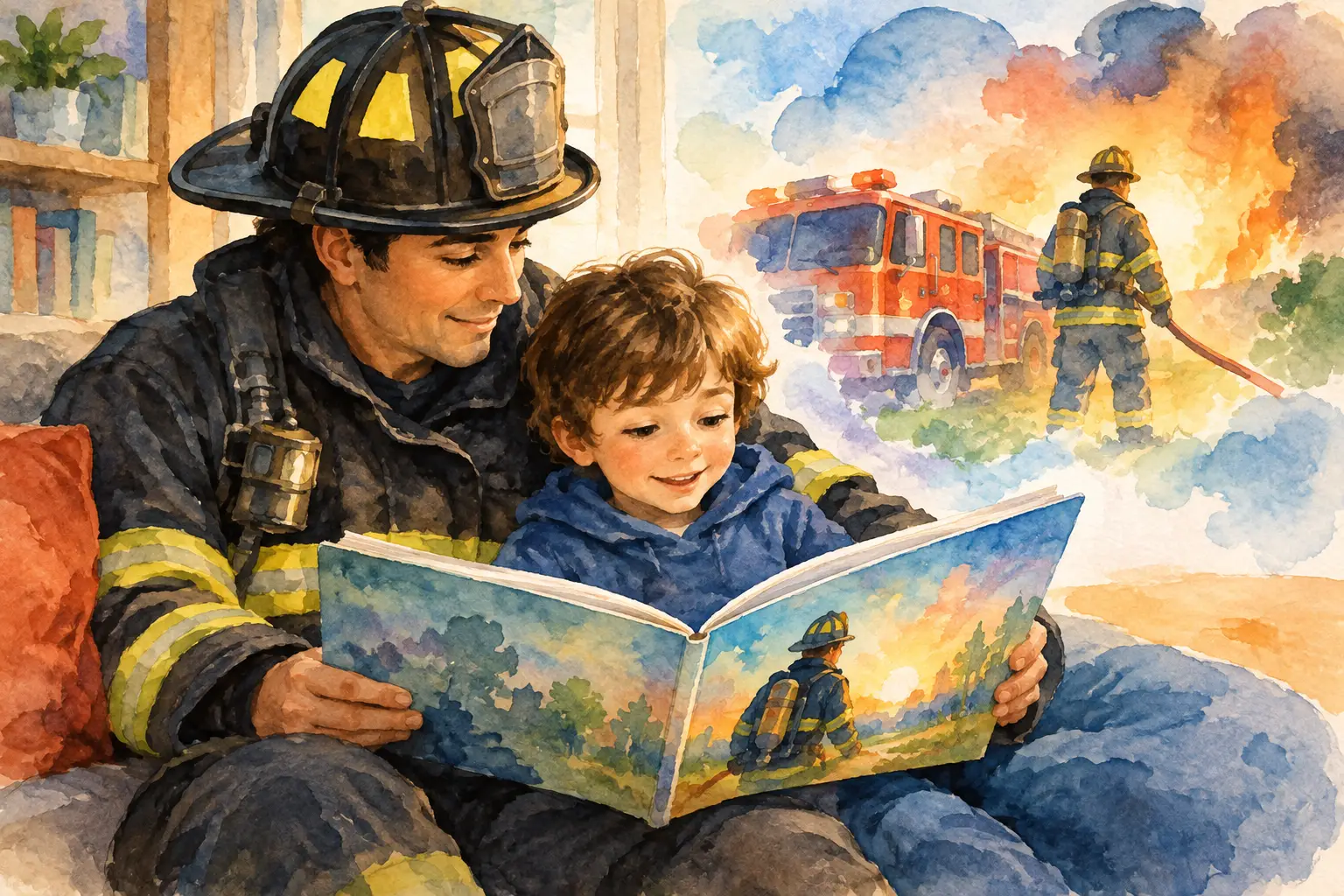
The fire truck is already racing across the living room rug. Your child has assigned stuffed animals to every seat, announced an emergency, and put on a pretend helmet made from a mixing bowl. A firefighter storybook for kids brings that big, brave play into reading time - and gives it a little more heart.
For young children, firefighters are more than people with shiny trucks and loud sirens. They are helpers who stay calm, work together, and care for others when something feels scary. A well-chosen firefighter story can turn that fascination into a cozy bedtime adventure, a conversation about community helpers, or a confidence boost for a child who loves being the hero.
The magic grows when the child is not just watching the rescue happen. They are part of it.
Why kids connect with firefighter stories
Firefighter stories have a natural beginning, middle, and end that young readers can follow. There is a problem to solve, a team that prepares, and a safe resolution. That rhythm is reassuring, especially for preschoolers and early elementary readers who are learning that challenges can be handled one small step at a time.
These stories also make room for feelings. A lost kitten, a worried neighbor, a smoky kitchen, or a stormy night can introduce concern without overwhelming a child. The firefighter responds with training, kindness, and help from others. By the last page, children see that being brave does not mean never feeling afraid. It means taking a helpful next step, even when something feels uncertain.
That is a message worth repeating beyond bedtime. Your child may remember it before their first day at a new school, a trip to the doctor, or the moment they decide to speak up for a friend on the playground.
What makes a firefighter storybook for kids meaningful
Not every rescue story needs a roaring blaze or a nail-biting emergency. For young readers, the most memorable firefighter books often focus on the details that feel close to their own lives: checking equipment, listening carefully, helping a pet get home, teaching a family about smoke alarms, or working alongside neighbors.
Look for a story with a clear, age-appropriate challenge and a gentle ending. A child ages 3 to 5 may enjoy simple repetition, bold visual moments, and a rescue involving an animal or a favorite toy. Children ages 6 to 8 can follow more teamwork, planning, and a fuller community storyline. They may enjoy seeing how dispatchers, firefighters, families, and neighbors all play a role.
There is a balance to keep in mind. Firefighters do important work in genuinely dangerous situations, but a children’s story does not need to make danger feel thrilling or frightening to be exciting. The best stories celebrate preparation, caution, compassion, and cooperation. They show that real heroes follow rules, ask for help, and use their skills to keep people safe.
A thoughtful firefighter story can also broaden a child’s idea of who gets to be brave. The hero can be a girl, a boy, a quiet child, a child who wears glasses, a child who loves animals, or a whole team of helpers with different strengths. Courage has many faces - and children deserve to recognize their own.
Make your child the helper in the story
When children see themselves on the page, they tend to lean in. Their name catches their attention. Their photo sparks a smile. Suddenly, the firefighter’s mission is not happening somewhere far away. It is happening to them.
A personalized story gives parents a wonderful way to shape the adventure around what their child already loves. Maybe your little one is obsessed with red fire engines and wants to rescue a puppy from a backyard shed. Maybe they would rather help at a neighborhood fire station, learn the names of the gear, and deliver safety tips to their friends. An older child might enjoy a mystery where they use observation and teamwork to find the source of a false alarm.
With LittleStories, parents can upload photos, choose a community hero theme, and select a page count that fits the moment. A shorter adventure can be just right for a busy weeknight. A longer one can become a special weekend read or a gift that grandparents enjoy sharing during a video call. 📚✨
Personalization is not only about a familiar face. It gives you a chance to reflect the details that make your child feel known. Their favorite color can appear on a helmet. Their beloved pet can become the station mascot. Their best friend, sibling, or grandparent can cheer them on at the end of the rescue. Those small touches invite children to return to the book again and again.
Build a story that feels exciting, not scary
If your child is sensitive to loud noises, emergencies, or images of fire, keep the adventure gentle. A firefighter story can still feel full of action when the mission is to help a duckling, guide a family through a safety drill, clear a fallen branch after a storm, or welcome children on a visit to the station.
Before reading, you can set the tone with a simple sentence: “This is a story about helpers who know what to do.” That reminder helps children understand that the adults in the story are prepared and that the ending will be safe.
As you read, pay attention to your child’s cues. Some children want to inspect every ladder, hose, and helmet. Others are more interested in the feelings of the people being helped. Pause when they have something to say. If a page brings up worry, reassure them without rushing past it: “That looks like a big feeling. The firefighters are working together, and everyone is getting help.”
For children who have experienced a real fire alarm, a family emergency, or a scary event, a fictional firefighter story may bring up questions. Follow their lead. Keep your answers honest and simple, and let the book be an opening for comfort rather than a lesson you have to force.
Turn reading time into brave, gentle play
The story does not have to end when the last page does. A few playful questions can help children carry its message into everyday life. Ask what job they would choose at the fire station, who they would help first, or what they would pack in a helper’s backpack. You may hear about a flashlight, a snack, a stuffed dinosaur, and a very necessary cape.
You can also talk about real-life helping in ways that feel practical rather than alarming. Point out smoke alarms at home. Practice identifying a trusted grown-up. Encourage your child to tell you which community helpers they see on a walk or drive. Keep the focus on preparation and care, not fear.
Pretend play is another lovely follow-up. Gather chairs for a fire truck, make paper badges, and let your child decide on the mission. If they want to be the firefighter, let them lead. If they want to be the person who calls for help, the dispatcher, the veterinarian, or the kitten, that works too. Every role shows them that communities are strongest when people help one another.
A keepsake with room to grow
Children’s interests can change quickly, but the feeling of being seen in a story lasts. A firefighter adventure created for a preschooler can become a sweet snapshot of the stage when they wore rain boots everywhere and believed every siren meant a mission was underway.
As their reading skills grow, revisit the book differently. A younger child may love naming the pictures. A developing reader can spot familiar words, read dialogue aloud, or retell the rescue in their own words. Later, they may laugh at the tiny details they once took very seriously - while still remembering how proud they felt to be the hero.
The best firefighter story is not the one with the biggest emergency. It is the one that leaves your child feeling capable, cared for, and ready to help in their own small way. Choose a story that makes room for their face, their voice, and their bright ideas, then snuggle close and let the next brave adventure begin. 🌟