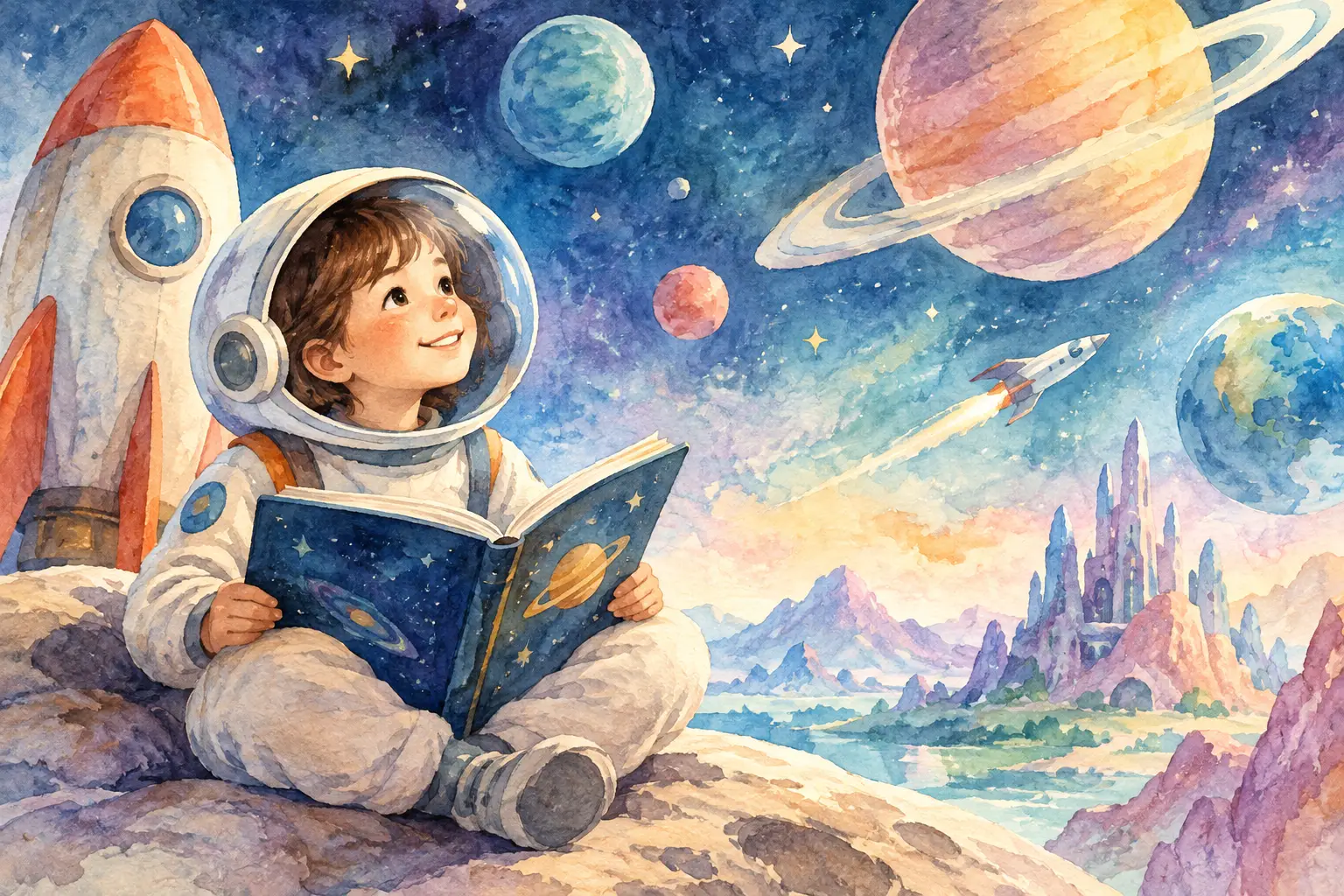
A countdown changes the whole feeling of bedtime. Instead of asking your child to settle down, you can invite them to climb aboard a moon-bound rocket, check the star map, and prepare for a mission that needs their special kind of courage. A space adventure book for kids becomes even more memorable when the young explorer in the story looks just like the child tucked beside you.
For preschoolers and early elementary readers, space has just the right amount of mystery. Planets glow in strange colors. Friendly aliens may need help. A missing comet can turn into a clue. Best of all, the biggest question is not whether a child can remember every science fact. It is what they will do when the adventure calls.
Why a Space Adventure Book for Kids Feels So Big
Children are often drawn to space because it gives their imagination room to stretch. There is no end to the stars, no single right way to picture an alien world, and plenty of chances for a small hero to make a very big difference. A child who may feel quiet at school or unsure in a new situation can become the captain who guides a crew safely through an asteroid field.
That emotional shift matters. Stories give children a safe place to practice bravery, problem-solving, and kindness. When a space station loses power, your child’s character can listen carefully, try a clever idea, and ask friends to help. When a lonely little alien is scared of the dark side of the moon, the hero can show compassion. These are gentle, kid-sized challenges with a wonderful payoff: children get to see courage as something they can choose.
A personalized story adds another layer. Seeing their own face in an astronaut helmet helps a child move from watching the adventure to feeling part of it. They are not only hearing about a hero. They are the one finding the secret star key, making the brave decision, and bringing everyone home.
Start With the Adventure Your Child Would Choose
The best space story is not necessarily the one with the most planets or the fastest rocket. It is the one that matches your child’s current interests. A child who loves animals might be thrilled to rescue a lost moon puppy. A natural builder may want to repair a rocket with colorful tools. A child who enjoys mysteries might prefer following glittery clues across the galaxy.
Think about the stories they act out during playtime. Do they announce missions from the couch? Do they carefully line up stuffed animals for a journey? Do they love finding hidden objects? Those small habits can point you toward a story setup that will hold their attention from launch to landing.
It also helps to choose one clear mission. Young children can follow a surprising adventure, but they connect best when the goal is easy to understand. Find the missing star. Deliver a birthday message to Mars. Help a tiny alien get back to its family. Save the galaxy’s bedtime light. A simple mission gives every exciting moment a place in the story.
Make the Hero Feel Familiar
Personal details do not have to overwhelm the plot. A favorite color on a spacesuit, a beloved stuffed animal riding in the rocket, or a familiar phrase your child says can make the pages feel wonderfully theirs. These touches create the delighted pause parents love to hear: “That’s me!”
Photos can make that recognition immediate. Choose a clear, cheerful image where your child’s face is easy to see. You do not need a professional portrait or a perfectly posed shot. A bright photo that captures their personality is more than enough to help transform an ordinary tale into a keepsake.
Build a Story That Grows With Their Reading Time
Page count is not just a practical choice. It shapes how the story fits into your family’s routine. A shorter adventure may be perfect for the final ten minutes before lights-out, when pajamas are on and everyone is ready for a calm landing. A longer book can suit a weekend afternoon, a road trip, or a child who asks for “one more page” with real determination.
For younger listeners, shorter scenes and repeated phrases work beautifully. They can join in with a launch countdown, make rocket noises, or call out the name of the next planet. Repetition is not boring when children are part of the action. It gives them a chance to anticipate what comes next and feel confident reading along.
For emerging readers, a slightly longer story can add clues, character choices, and a satisfying return home. They may enjoy tracing the mission from problem to solution and spotting details in the illustrations. The right length depends on your child’s attention span, not on a rule about what a book should be.
Let Space Be Playful, Not Pressure-Filled
A space story can spark curiosity about the real universe, but it does not need to become a lesson plan. The magic comes first. If your child asks why the moon looks different or whether people can live on Mars, wonderful. Follow their question with a simple answer, then return to the tale.
You can extend the fun after reading without turning it into another task. Make a blanket rocket, draw a planet no one has discovered yet, or look out the window and pick a star for the hero’s next mission. A favorite story often becomes a launchpad for pretend play, conversations, and family jokes that last long after the book is closed.
There is a small trade-off to consider. A story packed with scientific facts may appeal to an older child who already loves planets, while a younger child may care far more about a silly robot sidekick or a sparkly moon cave. Neither approach is better. The goal is to meet your child where their imagination is right now.
Create the Kind of Bedtime Memory They Will Ask for Again
Personalized books work especially well as part of a repeating ritual. Read the story with the same cozy blanket. Let your child press the imaginary launch button before you begin. Pause at a favorite page and ask what they think the captain should do next. Over time, those little rituals become part of the story’s meaning.
At LittleStories, creating a custom adventure can be as simple as choosing a space theme, uploading your child’s photo, and selecting the page count that works for your family. The finished eBook can live in a personal library, ready for the nights when your child wants to visit the stars again.
A personalized space book can also make a thoughtful gift for a birthday, a new sibling celebration, or a child who is about to begin a new school year. The message underneath the rocket ships and glowing galaxies is quietly powerful: you are seen, you are capable, and there is room for you in every adventure.
When the lights are low and the day has been busy, you do not need an elaborate plan to create wonder. Sometimes it starts with a small hand turning a page, a familiar face in a helmet, and the question every young astronaut loves to hear: “Are you ready for your next mission?”